Go-to-Market strategy for agtech : everything you need to know
Go-to-market strategy for agtech is one of the most critical yet often underestimated factors behind the success or failure of agricultural technologies. While the AgTech sector is experiencing rapid innovation from robotics and sensors to precision agriculture and autonomous machinery, many solutions struggle to reach widespread adoption.
The reason is simple: building a powerful technology is only half the challenge. Successfully bringing it to market requires a clear market entry strategy, strong product positioning, and a deep understanding of farmers’ real operational needs.
- In this article, we'll explore the key steps, frameworks, and market insights needed to build a Go-to-Market strategy for AgTech;
- We'll focus on how to define your value proposition, your ideal customer profile and how to validate your product market fit before scaling;
- then see how to choose the right agtech distribution network and set pricing.
What is the importance of a Go-to-Market strategy for agtech ?
In the agricultural technology sector, innovation alone is rarely enough to succeed. Many startups and manufacturers focus heavily on engineering, building sophisticated machines, sensors, or robotics solutions designed to transform farming. However, even the most advanced technology can struggle to gain traction if the market entry strategy is not enough anticipated.
Agriculture is a unique industry. Farmers adopt technology cautiously because every investment directly affects their production, profitability, and risk exposure. A new machine or technology must not only work but also integrate seamlessly into existing farming systems, labor availability, and economic constraints.
This is why a go-to-market strategy (GTM) for agtech is particularly important in AgTech. It defines how a company will introduce its technology to the market, reach the right customers, and build trust in an industry that relies heavily on long-term relationships.
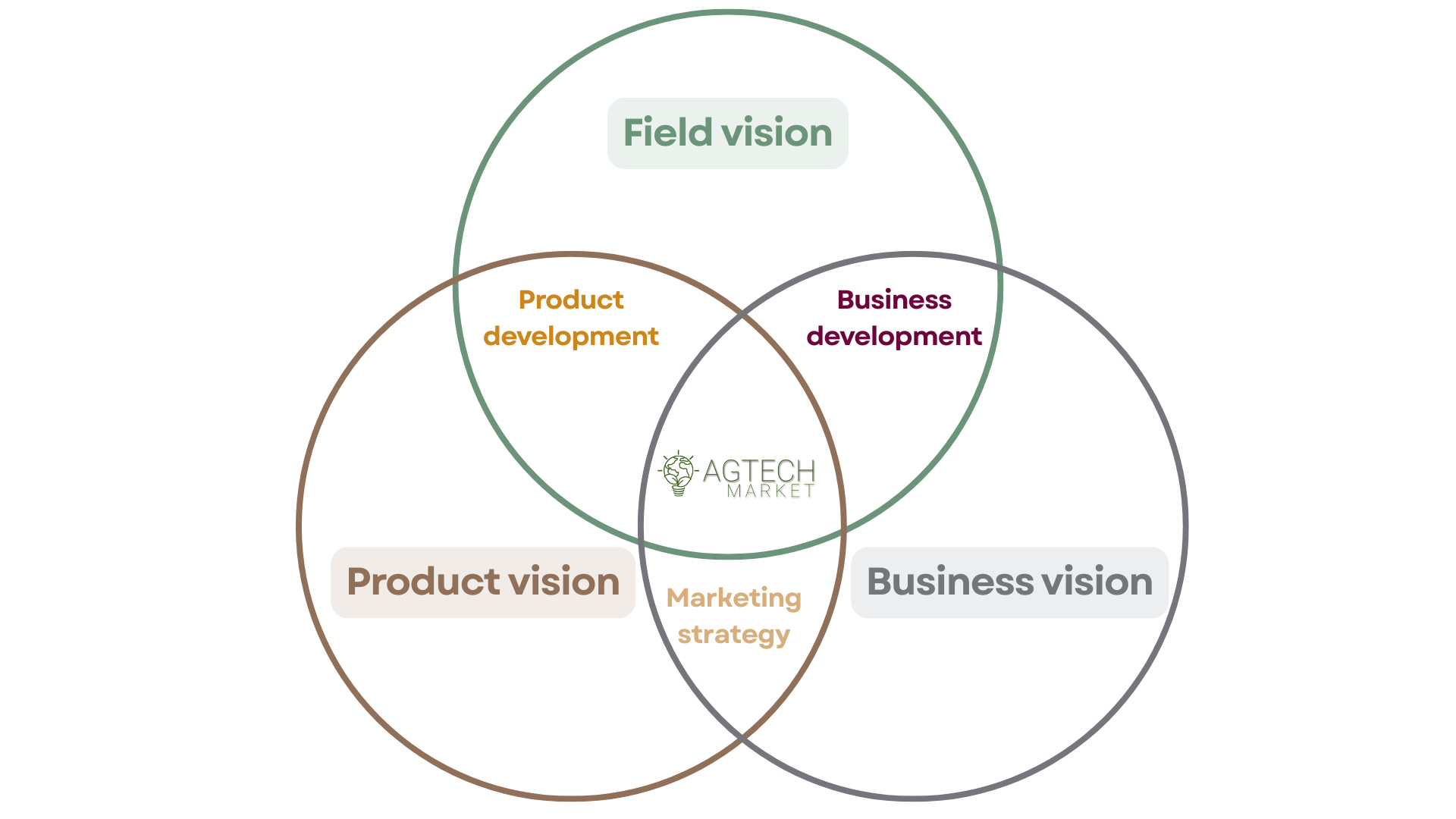
Without a clear GTM strategy for agtech, companies often face several challenges:
launching a product before farmers fully understand its value
targeting the wrong segment of growers
selecting an unsuitable distribution channel
setting a price that does not reflect the real value delivered to the farmer
For example, many agricultural robotics companies initially focus on technical performance rather than field integration. A weeding robot may perform extremely well in controlled tests but still struggle to gain adoption if it requires too much constrains (operator training, task planifications, logistics, new management practices), or is too expensive relative to the expected return on investment.
A good example of the difficulty of scaling can be found in this article:
- Who is the first real customer for this technology?
- What problem does it solve on the farm?
- How should the product be introduced to the market?
- Which distribution model will support its growth?
In AgTech, success rarely comes from launching a product everywhere at once. Instead, the most successful companies carefully build their market presence step by step, starting with early adopters and gradually expanding as the product and business model mature.
How to build a Go-to-Market strategy for AgTech step by step
Building a go-to-market strategy for agtech in agriculture requires a structured approach. Unlike many other industries, the agricultural market is fragmented, highly seasonal, and strongly influenced by local agronomic practices.
A successful GTM strategy therefore requires combining market understanding, product positioning, and distribution planning.
The following steps provide a practical framework to design a go-to-market strategy tailored to agricultural technologies.
Understanding the AgTech landscape before building your Go-To-Market strategy
Before defining how to sell a product, companies must first understand the ecosystem in which it will operate.
The AgTech landscape includes multiple stakeholders:
farmers and growers
cooperatives
machinery dealers
contractors
agronomists
distributors and importers
Each of these actors influences technology adoption in different ways.
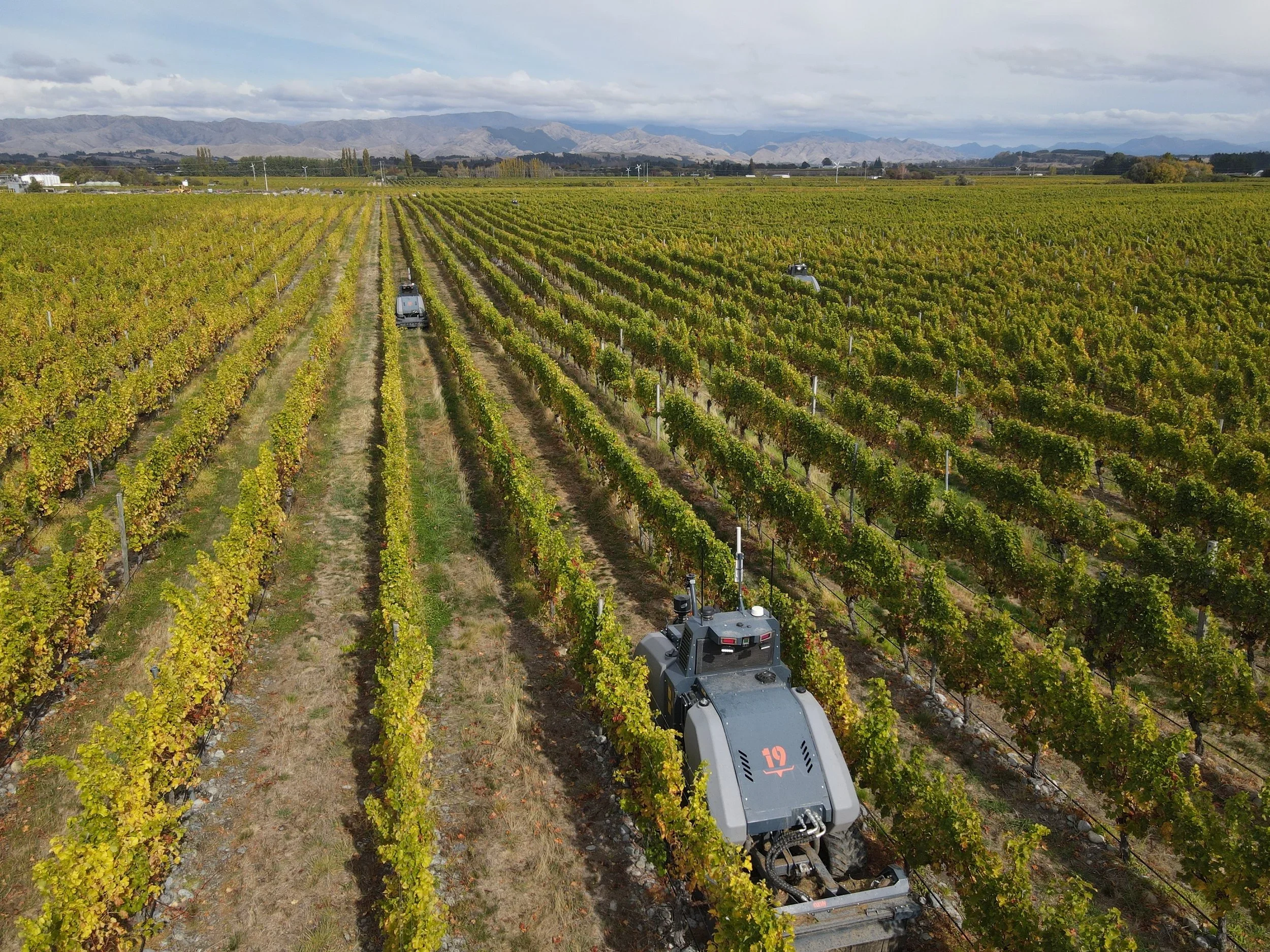
For example, a vineyard robotics solution may need to convince not only winegrowers but also contractors who perform mechanical operations across multiple farms. Similarly, in the vegetable sector, adoption may depend heavily on labor availability and seasonal workforce costs.
Market understanding also means analyzing the structural drivers of technology adoption, such as:
labor shortages
rising input costs
regulatory pressure on pesticides
local environmental constraints
farm size and mechanization level
For instance, autonomous weeding robots have gained some interest in Europe partly because of stricter herbicide regulations and increasing labor scarcity in vegetable production. But on the other hand, legislation, local land parcels, logistical requirements, and the price of robots mean that their development remains very limited compared to conventional straddle carriers.
Companies that fail to analyze these drivers and anticipate barriers often develop technologies that are technically impressive but poorly aligned with real market needs.
Define your value proposition
Once the market landscape is clear, the next step is to define the product’s value proposition.
In agriculture, the value proposition must be extremely concrete. Farmers rarely invest in technology based on promises alone; they want to understand how the solution will improve their operations.
Typical value drivers in AgTech include:
1- reducing labor costs
2- increasing yields
3-improving operational efficiency
4- improving (secure) crop quality
5- reducing input use
For example, a laser weeding system may position itself around labor savings, while a spot sprayer system may focus on herbicides savings and yields savings.
However, the value proposition should not only describe the technology itself but also clearly demonstrate the economic benefit for the farmer.
In many cases, the success of a technology depends on its ability to show a clear return on investment within a reasonable time frame.
Define your ideal customer profile
Not every farmer is a potential customer in the early stages of a technology’s development.
Identifying the ideal customer profile (ICP) is therefore essential.
Early adopters in agriculture typically share several characteristics:
larger farm operations
openness to innovation
willingness to test new technologies
strong economic incentives to solve a specific problem
For example, robotic harvesters may first be adopted by large fruit growers facing severe labor shortages. Vineyard robot technologies may initially attract growers with high value terroirs or strict environmental regulations.
Targeting the right early adopters helps companies gather valuable field feedback and build credibility within the farming community.
Validate product market fit before scaling
One of the most common mistakes in AgTech is attempting to scale too early.
Product-market fit occurs when a technology consistently solves a real problem for a specific group of customers and generates repeatable demand.
In agriculture, achieving this stage often requires several years of field testing, product improvements, and customer feedback.
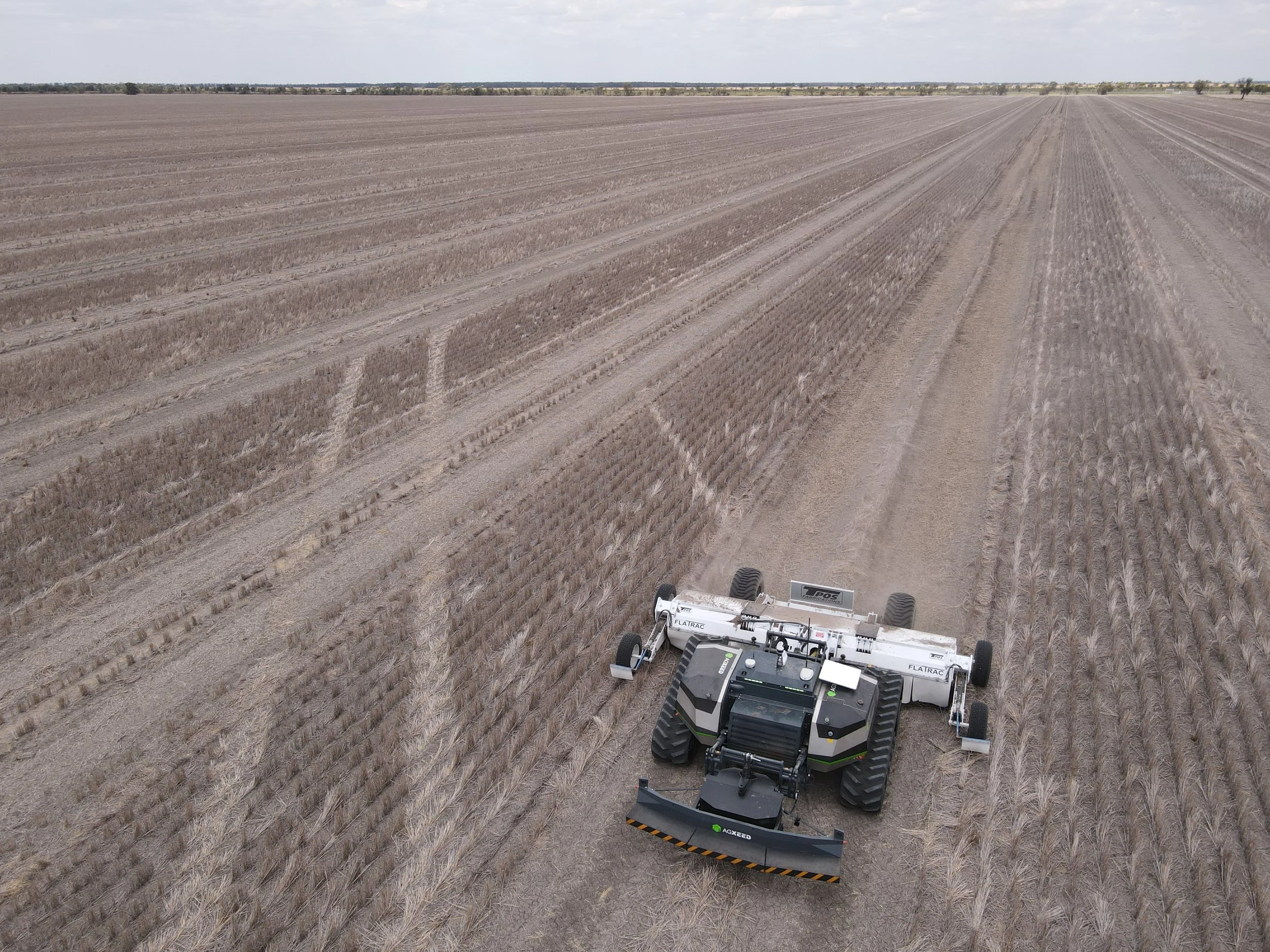
AgXeed robot in action
For example, many robotics companies make the mistake of scaling internationally before having a product fully answering market needs and sufficiently robust. The problem is that once the machines are in the field, maintenance, improvements, and unsatisfied customer are too costly for young companies. So better spend multiple seasons refining their machines locally in real farming conditions before expanding to new regions.
Without product-market fit, scaling can lead to costly failures, including:
Unsatisfied customers
excessive support costs
product/brand reputation damage
Validating product-market fit ensures that the technology is ready for broader market expansion.
Choose the right distribution model
Once the product begins to gain traction, companies must decide how to distribute it.
In AgTech, several distribution models exist, including:
working with importers or distributors
building a direct sales team
partnering with strategic market specialists
Each model offers different advantages and limitations depending on the product’s maturity and the company’s resources.
For example, working with distributors may accelerate market access but can reduce control over pricing and brand positioning, and for some project loosing contact with the field is the worst scenario.
Direct sales provide greater control but require significant investment in local teams and infrastructure, plus the complexity of managing local regulations, administration and staff. This option should be reserved for companies with strong financial backing and a high value-added product to offset distribution costs.
As far as the strategic partner is concerned, it's a bit like the best of both worlds, with the limitation of its ability to scale.
Choosing the right distribution model is therefore a critical part of any go-to-market strategy.
Set pricing models
Pricing agricultural technologies is often more complex than simply adding a margin to production costs.
Farmers evaluate investments primarily based on economic return, meaning that pricing should reflect the value created on the farm, do not be too greedy.
Several pricing approaches are commonly used in AgTech:
equipment sales (historically)
leasing models (more and more)
service-based pricing (depending the product)
pay-per-hectare models (not what farmers like best)
For instance, many robotics/drone/spot spraying companies offer machines through service contracts where farmers pay based on the area treated rather than purchasing the equipment outright. And from experience, it is much more complex to implement than on paper.
We also see a lot of business models with subscription fees, which farmers are really not fans of, having to pay for a machine they have purchased. When there is a monopoly, they have no choice, but we see with GPS that this is a model that quickly runs out of steam when there is competition.
Selecting the right pricing model can significantly drive adoption and long-term profitability.
The product maturity curve
Agricultural technologies evolve through several stages before reaching large-scale adoption.
Understanding this product maturity curve is essential when designing a go-to-market strategy for agtech.
Most technologies move through four main phases:
Prototype and early field testing (Still R&D)
Early adopter phase
Product-market fit
Industrial scale and international expansion
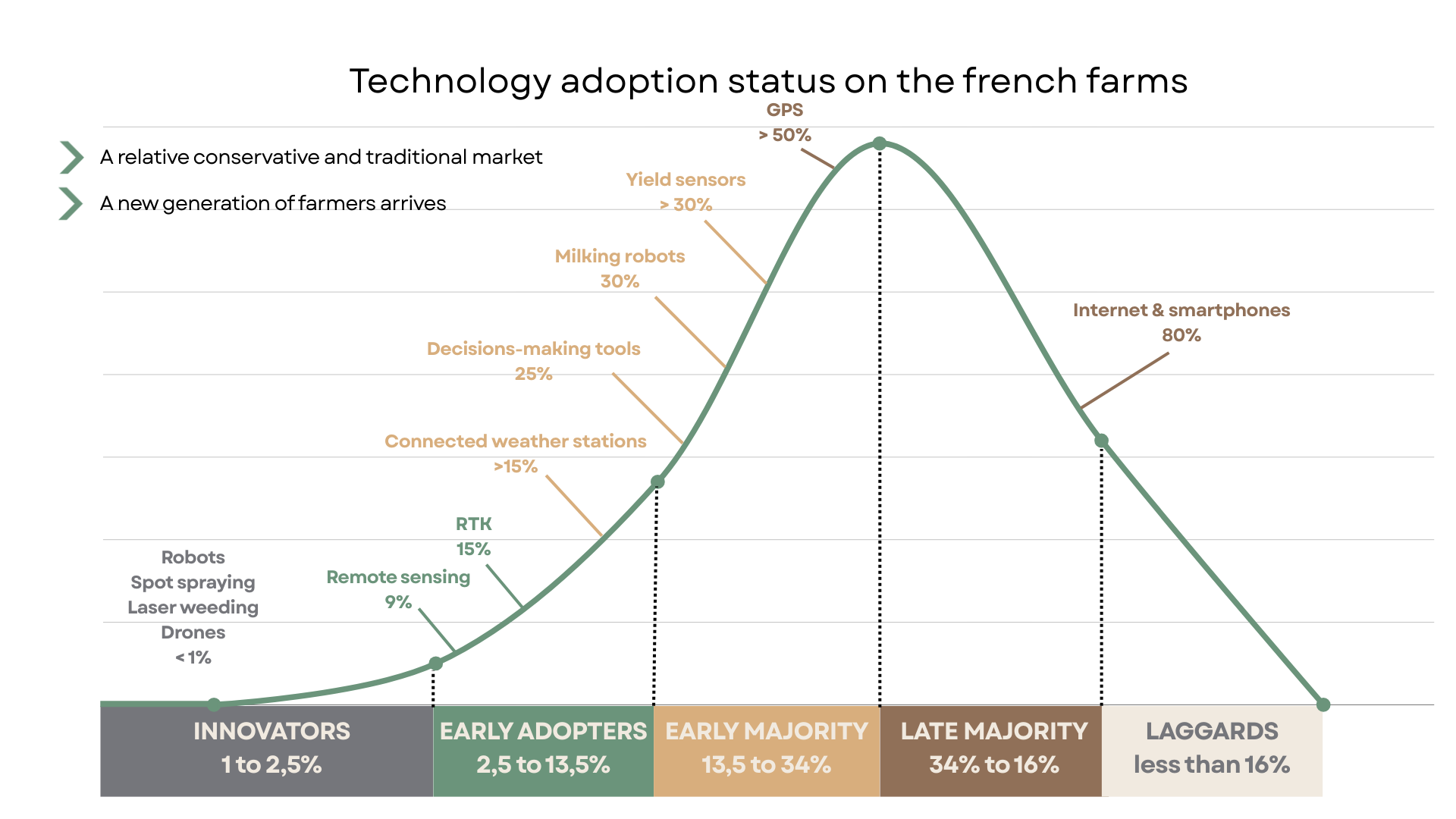
At each stage, the commercial strategy and distribution model may need to evolve.
For example, early-stage technologies often require close collaboration with farmers and intensive field support. As the product matures and becomes more standardized, broader distribution networks may become more relevant.
Aligning the go-to-market strategy with the product maturity stage helps reduce risk and improve the chances of successful expansion.
Why most innovative agricultural technologies fail to expand internationally ?
Many AgTech companies succeed in developing innovative technologies but struggle to expand beyond their initial market.
International expansion introduces additional challenges, including:
different agronomic conditions
regulatory constraints
local farming diversity practices
different cultures
distribution network differences
Higher Customer Acquisition Cost and sales cycle
In many cases, companies underestimate the complexity of entering new agricultural markets.
Another common mistake is choosing the wrong distribution model too early. For example, relying entirely on distributors too early may limit market feedback, while building a direct sales team can require substantial financial resources, especially if your Customer Acquisition Cost represents a high part of your product price.
These strategic decisions can strongly influence the success or failure of international expansion.
To better understand these options, it is important to compare the different distribution approaches available to AgTech companies.
When to use a go-to-market strategy for agtech ?
A go-to-market strategy for agtech should not only be developed when launching a new company. It is relevant to adapt it at several key moments in the lifecycle of an agricultural technology.
Companies typically revisit their go-to-market strategy when:
Launching a new product
Entering a new geographic market
Transitioning from pilot projects to large-scale sales
Struggling with their distribution model
In the fast-evolving AgTech sector, continuously refining the go-to-market strategy helps companies remain aligned with market needs and technological maturity.
Ultimately, a well-designed go-to-market strategy helps transform technological innovation into real adoption in the field.
- The worst-case scenario? A free conversation with an AgTech Market expert who will challenge your go-to-market strategy and provide an external perspective.
- The best-case scenario? Finding the strategic partner you need to refine your GTM and successfully launch your technology.
Go-to-market strategy for agtech is the strategic bridge between agricultural innovation and real-world adoption. In a sector shaped by complex ecosystems, cautious purchasing decisions, and long investment cycles, success depends on much more than building advanced technology. Companies must carefully align their market entry strategy, value proposition, product positioning, pricing model, and distribution channels with the real needs of farmers and the realities of agricultural operations.
Without a structured AgTech go-to-market plan, even the most promising innovation can fail to reach the right growers or demonstrate its real value in the field.
For AgTech companies aiming to scale, the challenge is not simply launching a product, but building trust within farming communities, proving clear economic value, and expanding at the right pace. Those who take the time to design a thoughtful and realistic Go-to-market strategy for agtech dramatically increase their chances of transforming innovation into sustainable growth.