
Agtech distribution network : the winning key
Agtech distribution network strategy is often the missing link between innovative agricultural technology and real adoption in the field.
From importers and dealers to direct sales teams or strategic partners, each approach offers different levels of market penetration, pricing control, customer feedback, and investment requirements.
Choosing the right structure can accelerate farmer adoption, while the wrong one can slow growth and distance companies from the realities of the market. I’m going to explain how long-term success in agricultural innovation often depends on building the rightAgtech distribution network.
- Together we will look at the pros and cons of each agtech distribution network;
- and see which agtech distribution network is the most suitable to your product maturity.
Understanding the Agtech distribution network reality
The AgTech market is complex and fragmented. Unlike software or consumer products, agricultural technologies don’t sell themselves. Physical distribution, farmer trust, and local knowledge are critical to adoption.
Many startups underestimate this. They focus on engineering, product features, or fundraising, assuming a great machine will find its market. But without the right distribution strategy, even the best technology struggles to scale.
Traditional importers or distributors can offer fast market access, but often limit your control over pricing, brand, and feedback. Direct sales give you full control but require heavy investment in a local team and support infrastructure.
This is why strategic partnerships, like working with AgTech Market, can be a game-changer. By combining market expertise, network access, and GTM advisory, startups can accelerate adoption and refine their strategy without taking excessive risk.
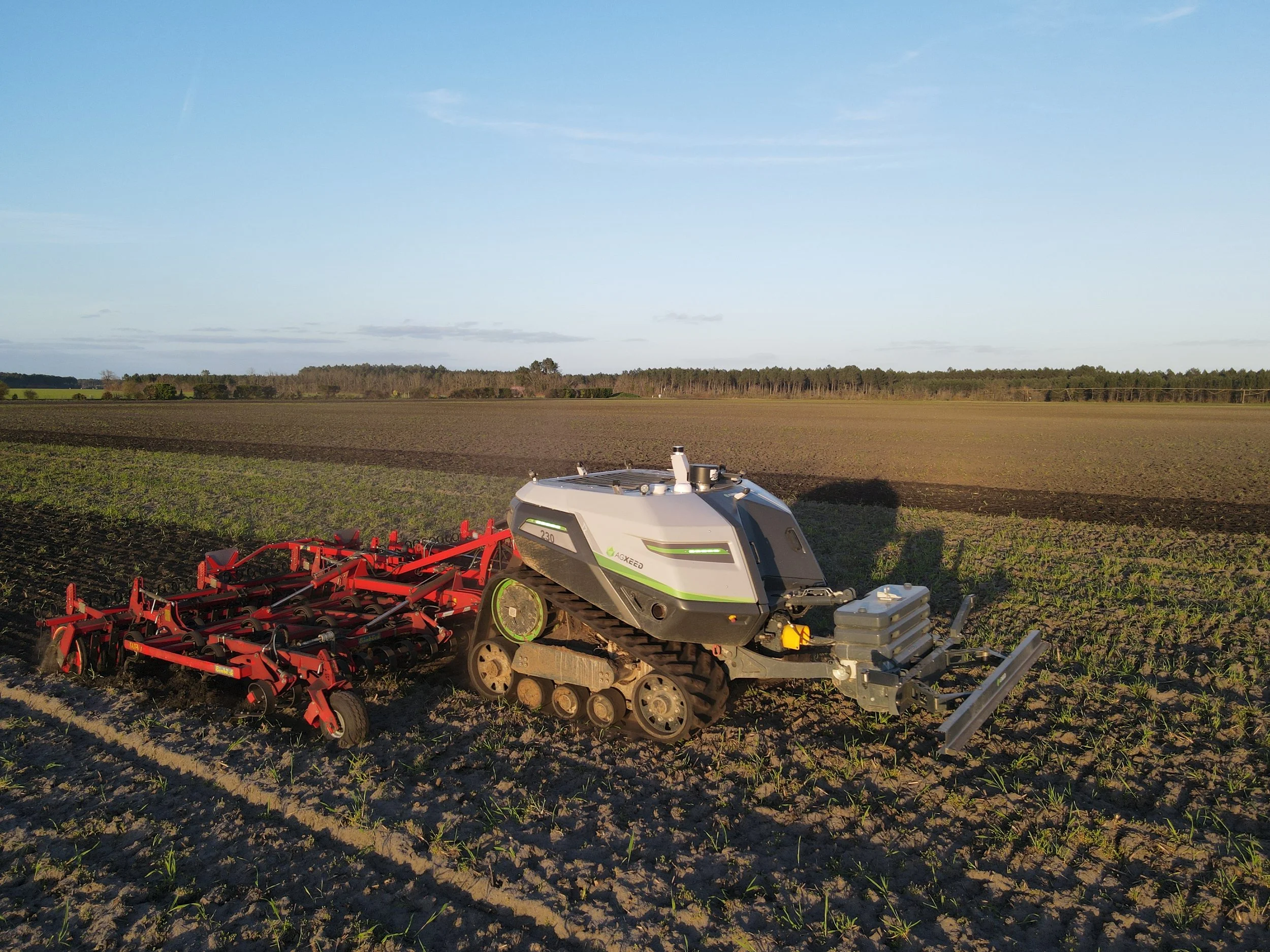
Which Agtech distribution network to choose ?
Working with an importer
Advantages:
Fast access to existing networks of farmers and dealers
Lower upfront investment
Leverages the credibility of established importers
Limitations:
Limited control over pricing and brand positioning
Reduced direct feedback from end users
Dependence on the importer’s priorities
Study case:
A weeding robotics startup initially tried selling through an importer. First sales were done quickly in the initial niche on which the product reputation were built. But as time went on, the importer took advantage of his exclusivity to artificially inflate margins, doubling the price of the machines without doing any business development or preparing for the future of the product.
The result: four years later, very limited sales, the importer has captured all the margins, but it is the manufacturers who provide after-sales service. The manufacturer has completely lost touch with the market and its customers and must rebuild its distribution network and reputation for reliability from scratch.
Direct sales
Advantages:
Full control over pricing, branding, and customer experience
Direct feedback from early adopters to refine the product
Strong positioning for long-term strategic growth
Limitations:
High upfront cost (team, offices, support)
Slower initial market penetration
Operational complexity, especially across regions
Study case:
A robotic weeding company launched a direct weeding as a service operation in California. They gained invaluable insights from early adopters, which allowed rapid product iteration. However, building the team and support infrastructure in California took a long time to set up time (approx. 2 years to have some stability), that ended up costing several million euros and the competitive advantage that the company had.
The result: five years later, the company decided to withdraw from the direct market due to a lack of financial resources.
Dealing with an Agtech strategic partner
Advantages:
Combines network access with expert advisory
Accelerates market learning without large upfront investment
Aligns distribution with product maturity and farmer adoption
Limitations:
Requires trust and clear alignment of objectives
Partner’s reach may initially be limited to focus on specific regions
This partner is limited by its ability to scale.
Study case:
A spot spray manufacturer called on a local company to set up the first prototypes to manage the initial pilot projects. This R&D and adaptation phase enabled the company to adapt the product and offer. After two years of preparation, the manufacturer sold more than 100 machines in a year. As the strategic partner was too small to support such amount of solutions, they went through a distribution network.
The result: now leader on the market, this market approach is still one of the brand's most successful in Europe.
Agtech distribution network : summary table
| Criteria | Importer | Direct Sales | Partenaire stratégique AgTech |
|---|---|---|---|
| Investment | Low | High | Moderate |
| Risk | Medium | High | Medium |
| Control over pricing & brand | Low | High | High |
| Market feedback | Low | High | High |
| Speed to market | Fast | Medium | Fast |
| Flexibility | Low | High | High |
| Ideal stage | Scale | Local market | Launch & Validation |
Choosing the right Agtech distribution network depends on your stage
Distribution strategies evolve as a company grows:
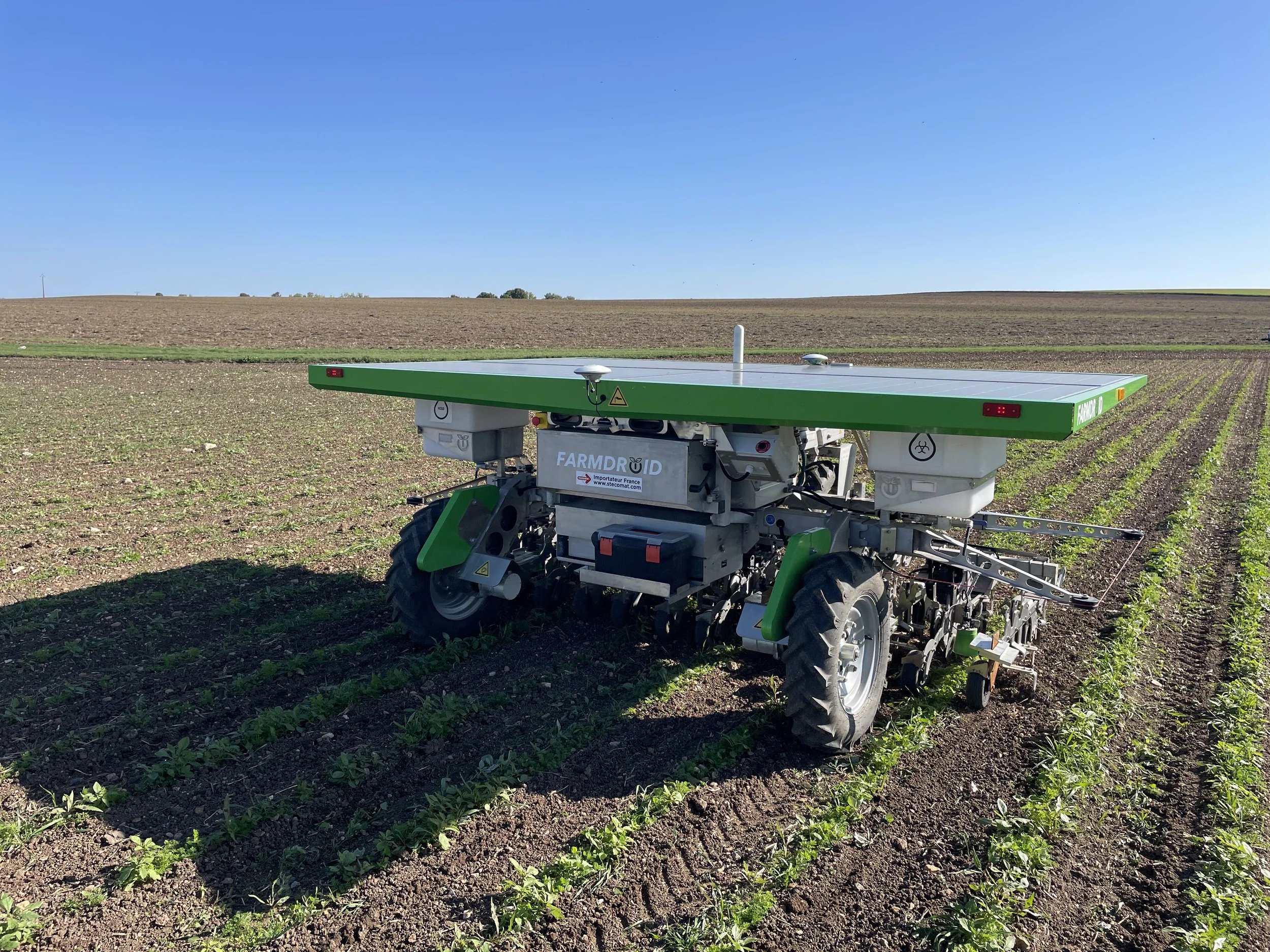
Early-stage products can leverage direct sales on local market and benefit from partners who can validate a new market and provide field insights.
Mid-stage products can leverage partners who can validate a market and provide field insights to maintain control, strengthen positioning while keeping flexibility
Scaling internationally may require distributors or hybrid models depending on local complexity and market potential.
Matching your distribution strategy to your product maturity and market readiness is critical to avoid wasted resources and missed opportunities.
AgTech Market services
Partnering with AgTech Market is about reducing risk, accelerating adoption, and optimizing your go-to-market strategy.
What we do:
New market preparation to focus energy and limit risk (Market analysis, GTM strategy…)
1 to 5 years contracts as sales agent, brand representative
Access to local network and knowledge (innovative growers / growers organization / institutions )
Business development (trade shows / demonstrations / CRM management)
Product development (Field feedback / Pilot followup / longterm development)
Develop and train your local distribution network
What we don’t do/ask:
Act as a traditional importer or dealer, fix the price
Ask for exclusivity
Take ownership of your product and after sales
Replace your internal technical team
We do not draft contracts with early adopters
If you’re preparing to launch your AgTech product, schedule a free consultation with me on the button below, let’s discuss your distribution strategy and see if I can help you !
Who I can help
At AgTech Market, I mainly work with agricultural technology companies that want to enter or better understand markets where I can bring real value, particularly France and Spain.
Company size is not the key factor. What matters most is the stage of the product and the market strategy.
I typically work with companies that:
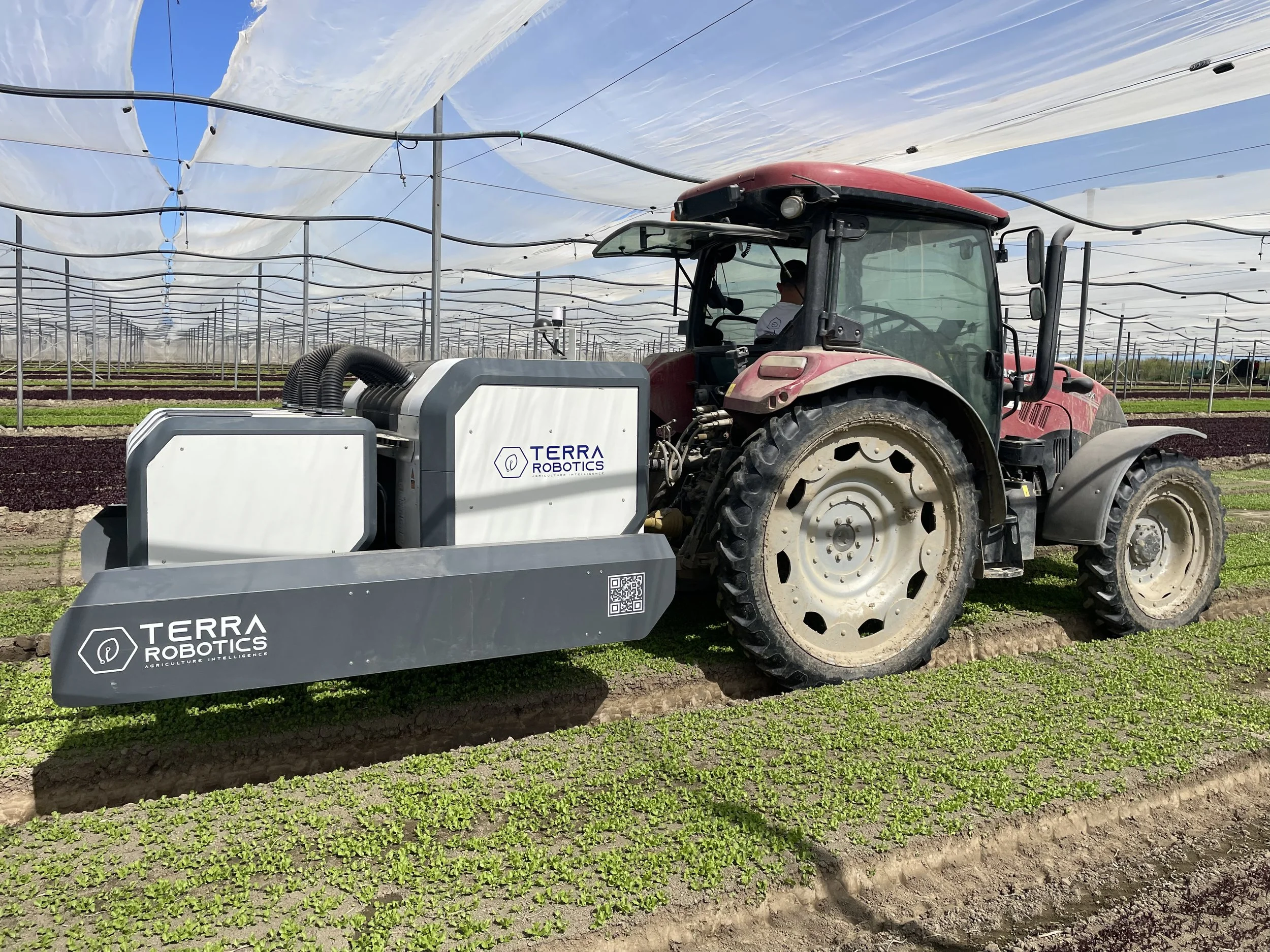
want to enter the European market, especially France or Spain
are preparing to launch a new agricultural technology
are struggling to sell their first machines
want to reconnect with farmers and the field after working mostly through distributors
are launching a new product line and want to rethink their go-to-market strategy from scratch
In many cases, these companies are still in the early commercialization phase, when market feedback, pricing strategy, and distribution choices are critical.
On the other hand, if your company has already sold hundreds of machines across Europe, has a well-established dealer network, and a fully structured sales organization, I may not be the right partner for you.
In that case, traditional distributors or internal sales teams are usually the most efficient approach.
But if you are still shaping your go-to-market strategy, testing new markets, or trying to better understand farmers’ needs, working with an AgTech strategic partner can significantly reduce risk and accelerate your market entry.
- The worst-case scenario is a useful conversation about your market strategy.
- The best-case scenario is finding the right partner to help you successfully launch your technology.
Choosing the right Agtech distribution network is crucial for companies aiming to expand in competitive farming markets such as Europe.
But, as the examples in this article show, there is no universal model. Importers can accelerate early access to markets but may limit control. Direct sales offer deeper customer relationships but require significant investment and time. Strategic partners, meanwhile, can help companies validate markets, adapt their products, and build the foundations for long-term expansion before scaling through larger distribution channels.
The key is to align distribution choices with your company’s product maturity, financial capacity, and market objectives. That is why developing the right Agtech distribution network remains one of the most strategic decisions any agricultural technology company can make.
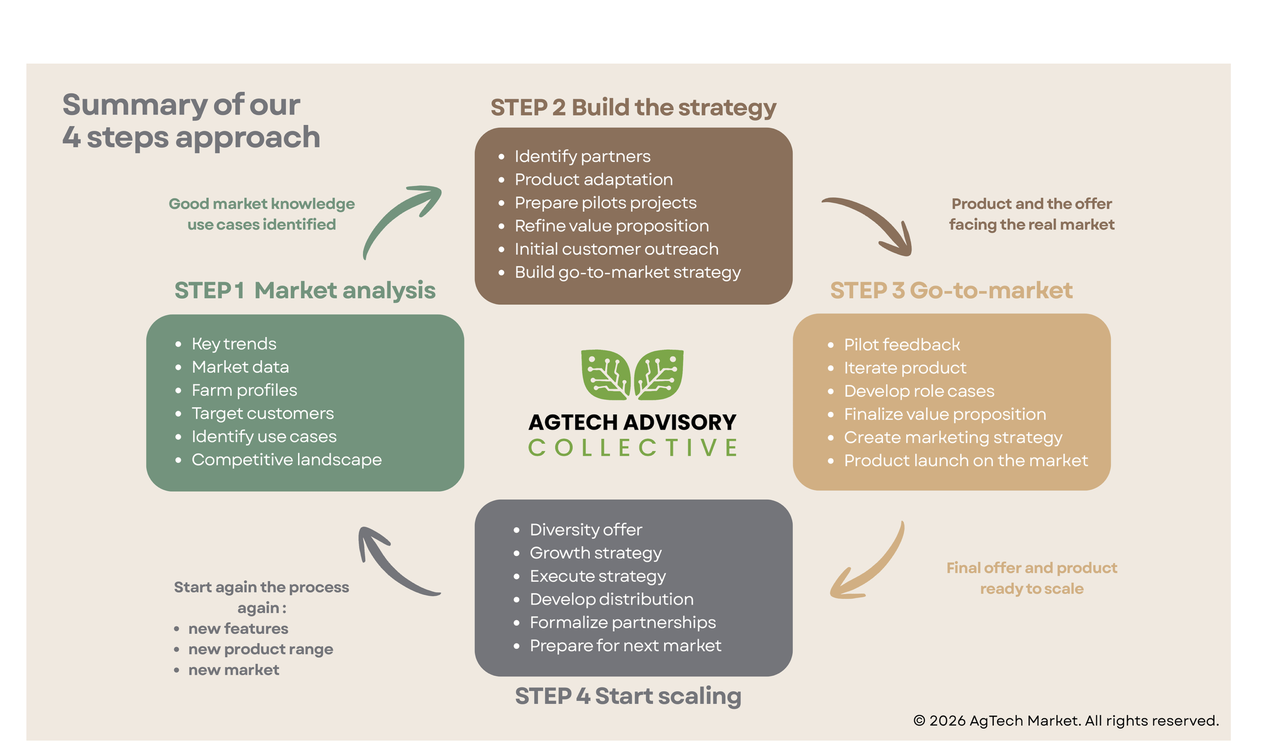
AgTech Market strategy